
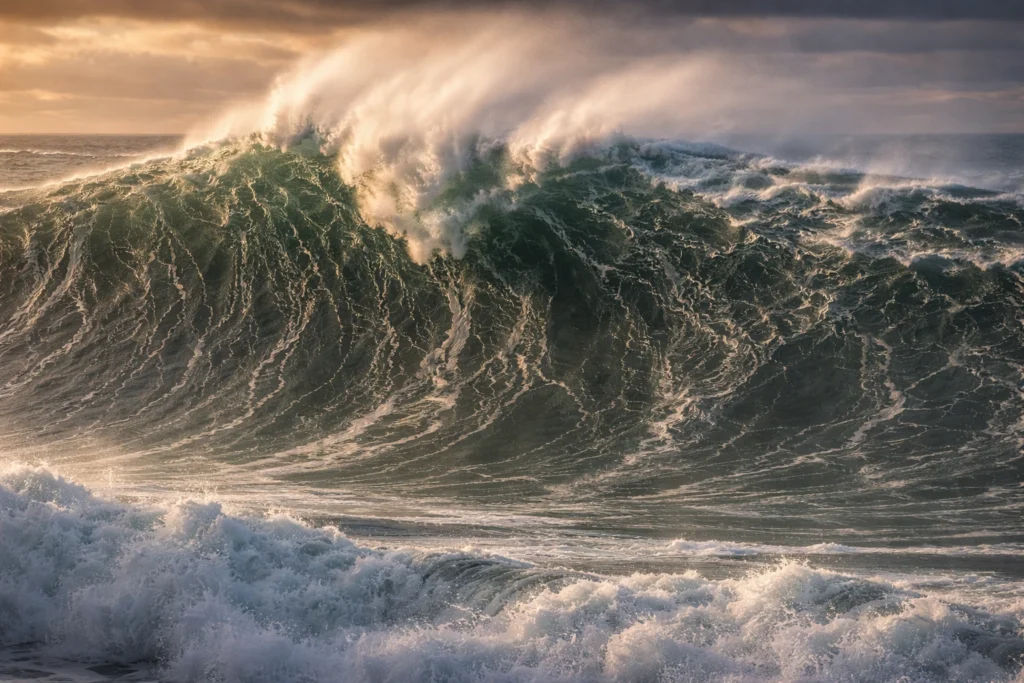
Nazaré’s “big” isn’t just hype—faces can tower 20–25+ meters on the very biggest days. But the number you see on maps isn’t a single crest; it’s a statistical value called significant wave height (Hs). This guide, in plain English, explains how wave height is measured, why face height looks bigger than Hs, and how records are verified at Praia do Norte.
Heads-up: For the canyon science, read Nazaré Waves Explained. For live tools and webcams, open Nazaré Surf Forecast: Today’s Waves, Webcams & Big-Wave Days. Planning a trip? Save the Nazaré Surf Trip Guide.
- At a Glance
- Quick Travel Planner – Nazaré
- Why “wave height” can mean different things
- How waves are measured (no jargon)
- Safety (Read This)
- Why Nazaré faces can dwarf the forecast
- Biggest waves: how “records” are verified
- “Map says X meters—how big will the faces be?”
- How to read the forecast in 30 seconds
- Plan a safe viewing day
- Things to Do in Nazaré (Beyond Surfing)
- Where to Stay in Nazaré
- How to Get to Nazaré
- Why Nazaré Should Be on Your Bucket List
- FAQ — Nazaré´s Wave Size & Records
- Related Nazaré Guides
Some of the links on this website are affiliate links — if you book through them, we may earn a small commission at no extra cost to you.
Spread the word about Nazaré
- Significant wave height (Hs) = average height of the highest one-third of waves over a time window.
- Face height (what you see in photos) is the trough-to-crest wall of an individual wave at the break—often bigger than Hs.
- Period matters: long-period swell (16–20 s) carries more energy and makes Nazaré’s faces stand up taller.
- Record benchmark: the largest officially surfed wave at Nazaré is 26.21 m (86 ft) face height (measured after the ride using scientific methods).
- Today’s call: Want to know if it’s on? Check the Forecast first.
- Flights: Find the Best Flight Deals to Lisbon
- Car Rental: Book Your Car Rental in Nazaré
- Hotels: Check Hotels & Stays in Nazaré
- Surf Camps: Find Your Ideal Surf Camp in Nazaré
- Activities: Book Fun Activities in Nazaré (boat tours, viewpoints)
- Tours: Discover Tours & Day Trips from Nazaré
Book early (Nov–Feb & holidays): lighthouse-area stays and car rentals sell out on hyped swells.
Fast links: Nazaré Surf Trip Guide • Nazare Surf Forecast
Why “wave height” can mean different things
1) Significant wave height (Hs) — the map number
- What it is: a statistical average of the highest one-third of waves measured by buoys or models.
- Why it’s useful: it describes overall sea state and is great for spotting big-day potential.
- Why it confuses people: Hs ≠ the tallest face you’ll see at the lighthouse.
2) Face height — the “whoa!” value
- What it is: trough to crest of a specific wave as it breaks.
- Why it’s bigger: shoaling + refraction + Nazaré Canyon focus make the breaking face exceed the bulk-sea Hs.
- Takeaway: a forecast Hs of, say, 6–8 m with long period can translate into much taller faces under the fort.
3) Buoy vs. beach
- Buoys measure waves offshore; bathymetry (seafloor shape) near Nazaré amplifies and focuses energy.
- That’s why you must combine Hs with period, direction and wind before calling a big-wave day.
New to canyon physics? The plain-English version lives here: Nazaré Waves Explained.
How waves are measured (no jargon)
- Buoys: floating instruments record heave (up-down motion) and compute Hs and period.
- Satellites: altimeters scan the ocean surface and feed global models.
- Models (e.g., ECMWF/GFS): blend observations with physics to forecast Hs, period, direction.
- At the break: face height is later estimated from photogrammetry/LiDAR/video with known reference points—how record waves get their numbers.
Safety (Read This)
Watching is free, but safety is non-negotiable:
- Stay behind barriers; rogue sets can push water and debris far inland.
- Keep children close; hold hands near edges.
- Drones: obey local rules and keep well clear of rescue operations.
- Give tow/rescue teams space to work.
Why Nazaré faces can dwarf the forecast
- Long period (16–20 s) = fast, powerful swell that interacts strongly with deep water → shallow bar.
- Canyon refraction splits/steers energy, then converges it near Praia do Norte, stacking the face.
- Local wind (NE–E) grooms the wall so it stands taller and holds shape longer.
For the full step-by-step (storm → canyon → wedge), jump to Nazaré Waves Explained.
Biggest waves: how “records” are verified
When a record is claimed (e.g., 86 ft), independent experts validate it using:
- Synchronized video/photos from multiple angles.
- Reference geometry (known heights/distances like the lighthouse, cliff features).
- 3D methods (photogrammetry/LiDAR) to compute trough-to-crest face height at the critical frame.
- Uncertainty & sign-off: analysts publish an error range and a final value; only then is a record accepted.
Current landmark at Nazaré: 26.21 m (86 ft) face height surfed at Praia do Norte—the widely recognized benchmark for biggest wave surfed here.
“Map says X meters—how big will the faces be?”
There’s no single multiplier (nature’s messy!), but here’s a plain-English filter for big-day potential:
- Period: 16–20 s
- Direction: W–NW aimed into the canyon axis
- Wind: NE–E (light–moderate)
- Map signal: clear Hs gradient feeding Praia do Norte
- Webcams: clean lines, steep face below the lighthouse
If those align, you’re in the realm where record-class walls are possible. Confirm now on the Nazaré Surf Forecast.
How to read the forecast in 30 seconds
- Open the Forecast and toggle Waves / Swell 1 / Wind.
- Click just offshore from the lighthouse for the spot card (hourly Hs/period/direction).
- Check Praia do Norte webcams to confirm face quality (spray blowing straight back = offshore).
- If guidance disagrees, compare ECMWF / ICON / GFS and re-check at first light.
Plan a safe viewing day
- Where to watch: the terraces at Forte de São Miguel Arcanjo above Praia do Norte (best angle).
- When to go: Nov–Feb is prime; Oct–Mar broader window.
- Stay close: base in Sítio da Nazaré so you can walk to the lighthouse at dawn. See the Nazaré Surf Trip Guide.
- Learn the spot: Praia do Norte (Nazaré) Surf Spot.
Things to Do in Nazaré (Beyond Surfing)
Between swells, Nazaré turns into an easy playground of cliffs, sea and town life—everything within a few minutes.
Jet ski with a big-wave crew
Trace the canyon line at water level and feel the thump of the sets from the inside.
Dolphin & coast boat tour
Roll past caves and sheer cliffs while scanning the channel for playful pods.
Paragliding tandem flight
Step off the headland and float above the bay, lighthouse and dunes.
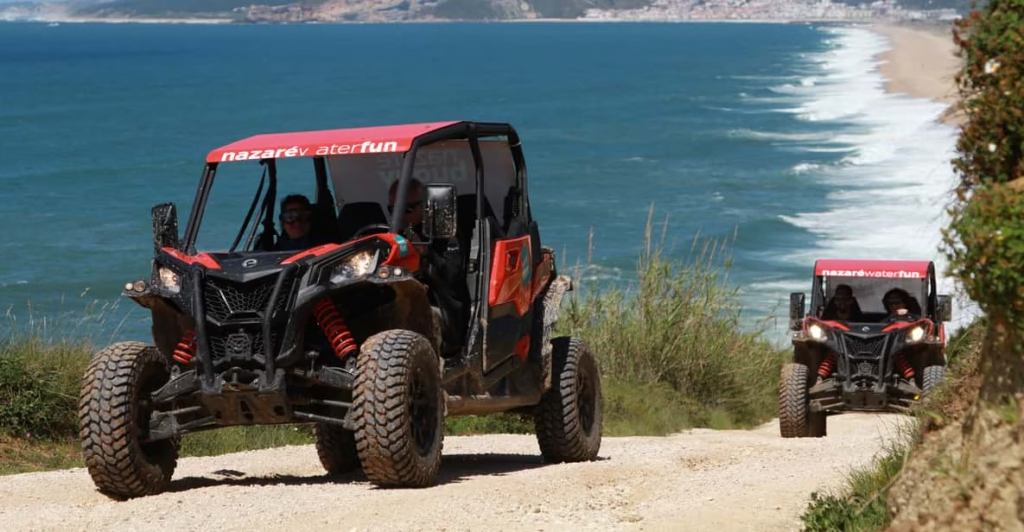
4×4 buggy adventure
Rattle along pine tracks and sandy backroads to secret viewpoints.
Jeep safari
Let a local driver thread the back lanes to windswept lookouts and story spots.
Guided walking tour
Markets, narrow lanes, Sítio viewpoints—get the history while you wander.
E-bike coastal loop
Markets, narrow lanes, Sítio viewpoints—get the history while you wander.
More ideas? Open 12 Best Reasons to Visit Nazaré, Top Things to Do Near Nazaré , or the full Nazaré Travel Guide.
Where to Stay in Nazaré
Pick your base by vibe: walk-to-lighthouse mornings in Sítio, or easy beach access in town.

Airy, stylish apartment near the headland—perfect for sunrise checks and quick terrace missions.

Cabins and pools tucked in the pines; quiet at night, simple drive back to the bay.

Friendly, social base with pool and bar—ideal if you want company near the viewpoints.

How to Get to Nazaré
Where: ~120 km (75 mi) north of Lisbon on the Silver Coast.
By Plane
Fly into Lisbon (LIS), then continue by bus, rental car or private transfer.
By Car
Lisbon → A8 to Nazaré (~1h30). From Porto: A1 → A17/A8 (~2h30). Fast roads, clear signs.
By Bus
Direct coaches from Sete Rios or Campo Grande reach Nazaré in 1.5–2 h and stop near the seafront.
By Taxi or Ride-Sharing
Door-to-door Lisbon–Nazaré transfers typically €120–€150—compare quotes before booking.
Why Nazaré Should Be on Your Bucket List
Few places let you watch ocean energy turn into theatre and then wander to dinner five minutes later. From the lighthouse terraces you’ll see walls of water stack and detonate at Praia do Norte; in the bay you can chase friendlier peaks, ride the funicular up to Sítio, and finish with a cliff-top sunset. Compact town, outsized moments—Nazaré sticks with you.
Found this guide helpful? Share it with friends who’d love Nazaré too.
FAQ — Nazaré´s Wave Size & Records
Related Nazaré Guides

Nazaré vs Mavericks: What’s Different (Canyon, Wave Shape, Safety & Watching)
When people talk about the biggest waves on Earth, two names dominate the conversation: Nazaré…
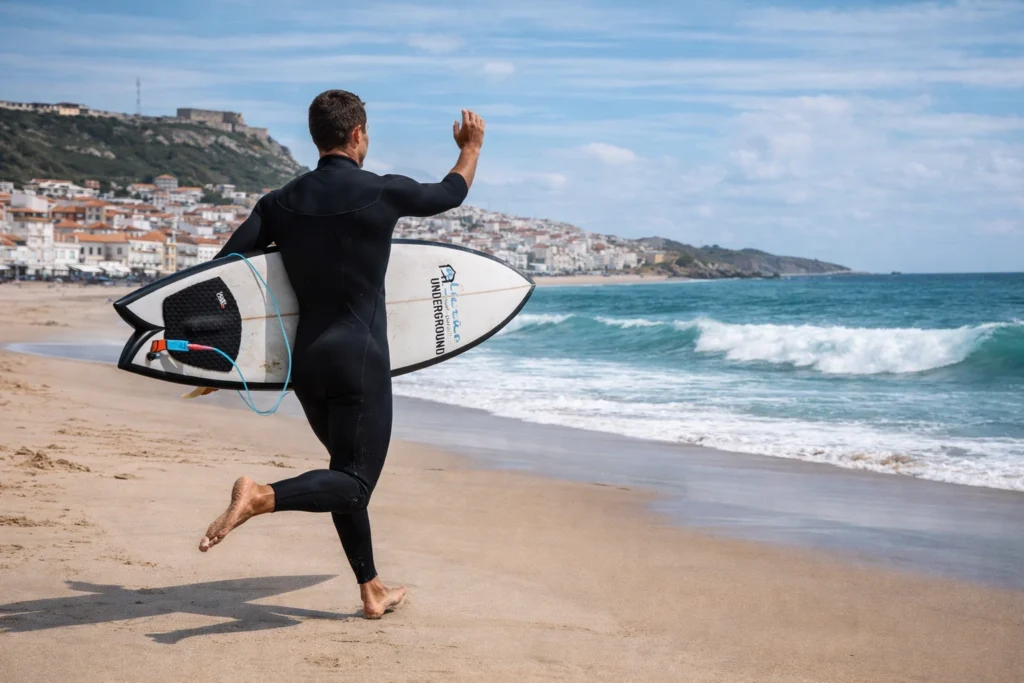
Surf Rentals & Surf Shops in Nazaré: Boards, Wetsuits & Repairs
Looking for surf shops in Nazaré or reliable surf rentals? Whether you want to rent…
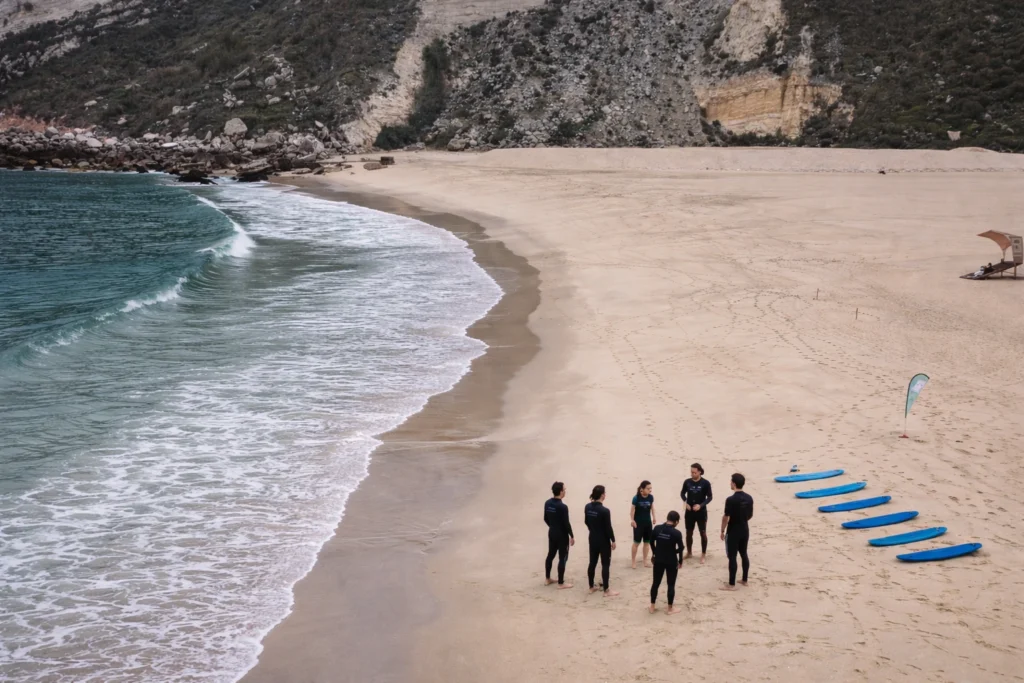
Surf Lessons in Nazaré: When It Makes Sense (and When Peniche or Ericeira Is Better)
Nazaré is world-famous for giant waves—but that reputation can be confusing if you’re planning surf…
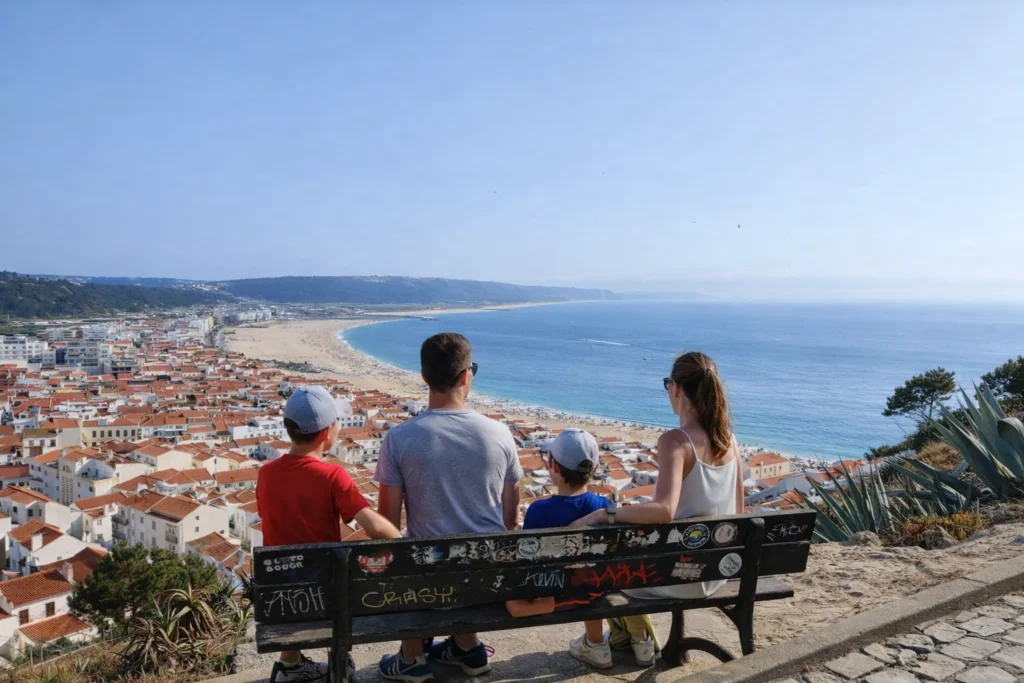
Nazaré With Kids: Family Beach Days, the Funicular & Easy Viewpoints
Visiting Nazaré, Portugal with kids can be relaxed and genuinely memorable when you keep it…
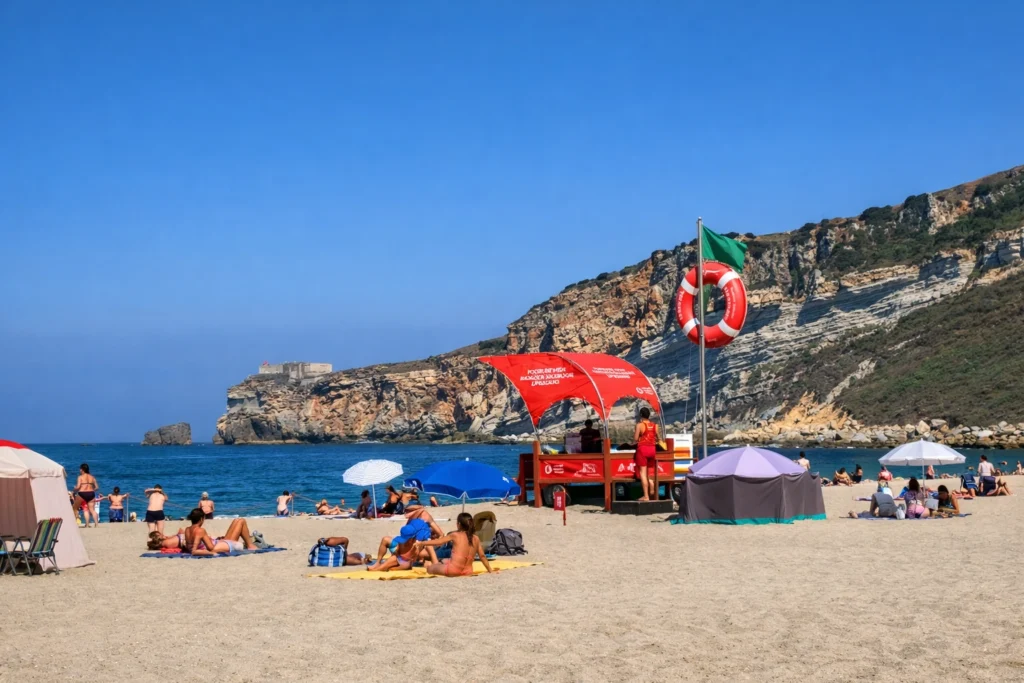
Can You Swim in Nazaré? Safest Beaches, Flags & Currents Explained
Can you swim in Nazaré? Yes — swimming is safe in Nazaré in the right…
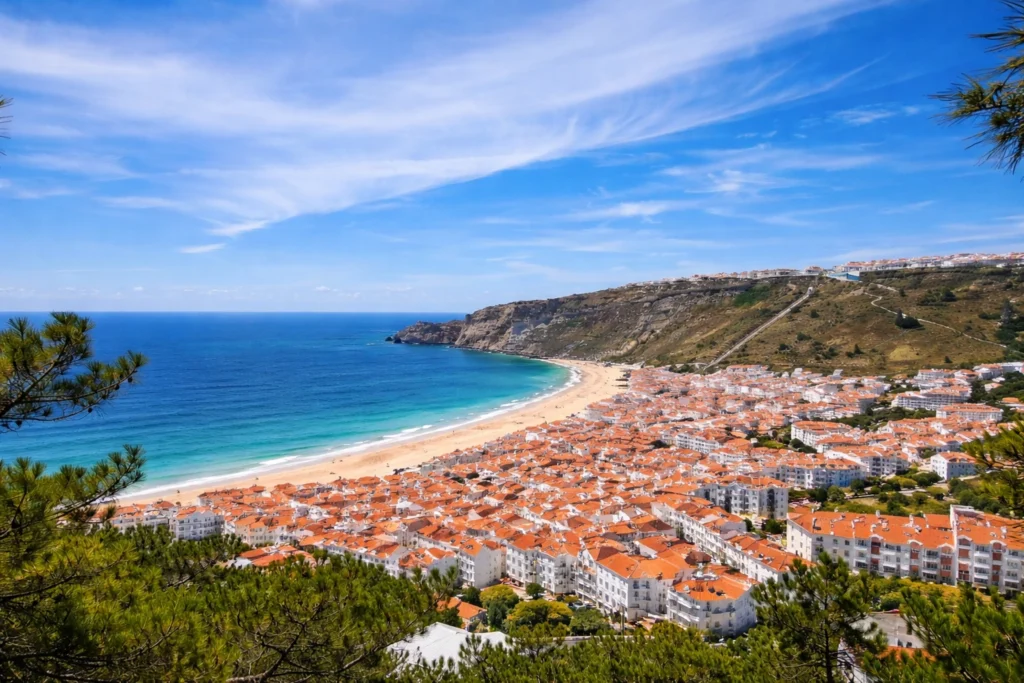
Nazaré Map: Beaches, Viewpoints & One-Day Itinerary
Nazaré is one of those places where a good map makes the day. Use our…

Lisbon to Nazaré: Day Trip Transport Guide (Bus vs Car vs Tour)
Planning a Lisbon to Nazaré day trip and wondering how to get to Nazaré quickly…
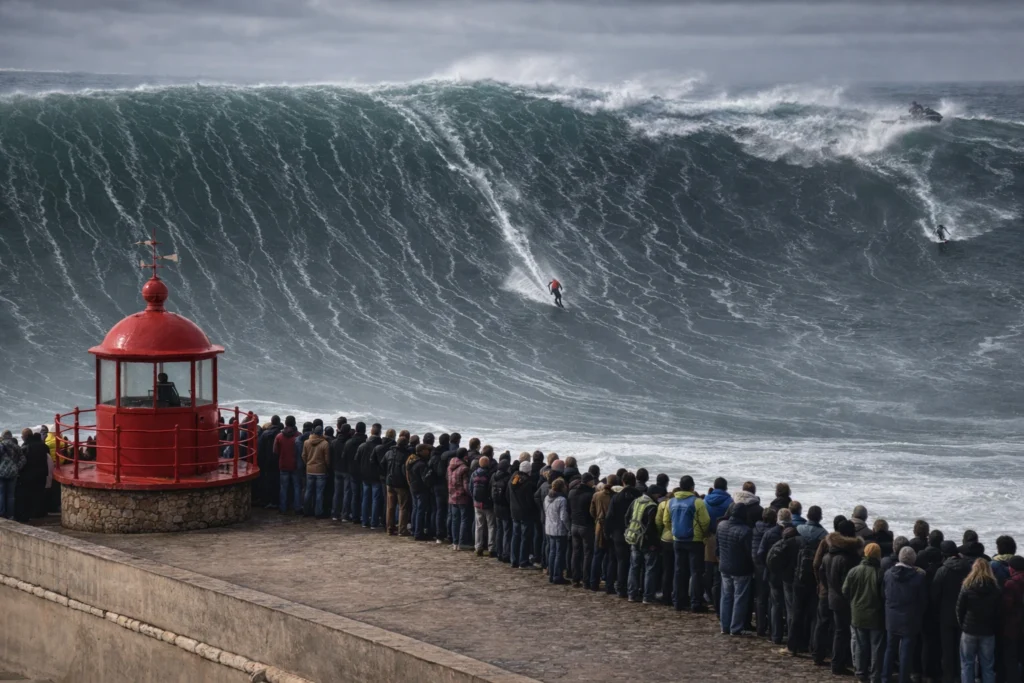
How to See the Big Waves in Nazaré (Viewpoints, Lighthouse, Parking & Safety)
If you’re wondering where to watch big waves in Nazaré, the short answer is: from…
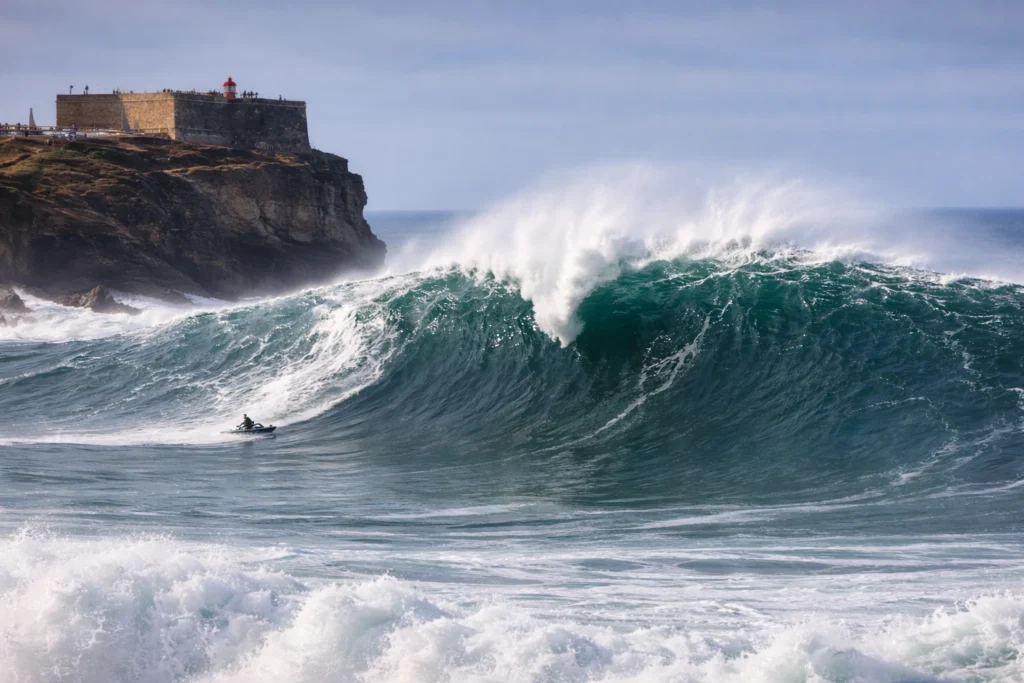
Nazare Big Wave Season (Month-by-Month): When to Go, What to Expect & How to Watch
The Nazaré big wave season runs October to March, with November to February as the…
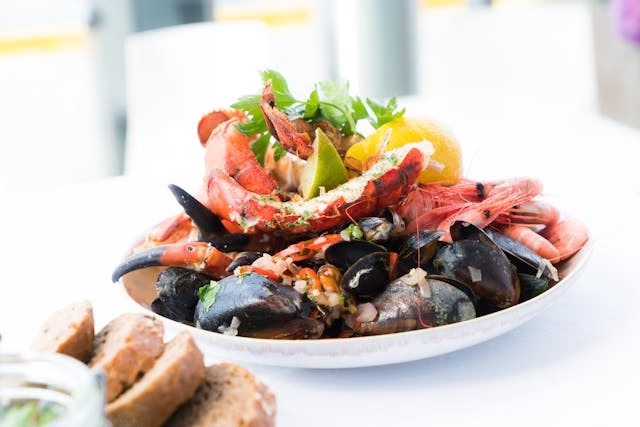
Where to Eat in Nazaré: Best Seafood & Restaurants with a View
Looking for where to eat in Nazaré—from ultra-fresh seafood to restaurants with a view of…
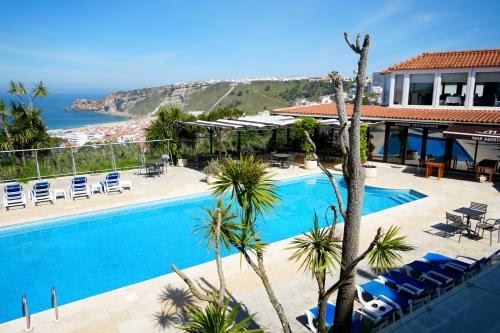
Where to Stay in Nazaré, Portugal (Best Areas & Hotels)
Planning a trip to Nazaré, Portugal? From beachfront stays on Praia da Vila to Sítio…
Things to Do Near Nazaré, Portugal – Top Activities
Already marveled at the legendary waves and cliffside views of Nazaré? If you’ve read our…